Building Re-engagement and Retention Beyond the Broadcast Window
Turning ephemeral live broadcasts into replayable and shareable assets through archive and short-clip workflows.
I built the workflows that enabled streamers and viewers to replay, clip, and redistribute live moments beyond the original broadcast window.
Offline Content as a Re-engagement and Retention Loop
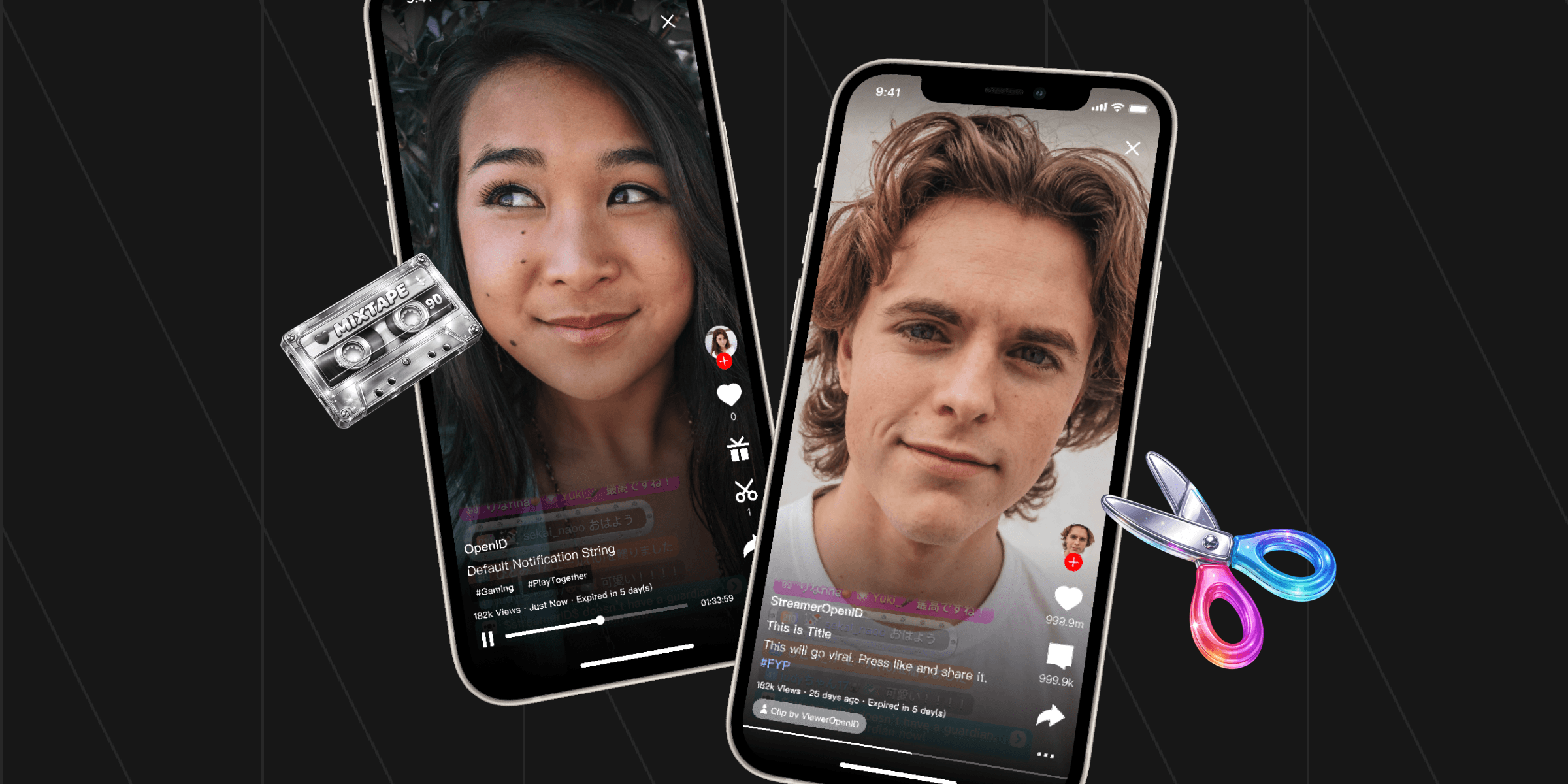
This case study covers how live content was expanded from real-time-only consumption into a reusable content system across replay and short-form surfaces.
The work combined two connected capabilities: archive for persistent playback, and 90-second clipping for lightweight sharing and redistribution.
Together, these capabilities shifted live content from one-time sessions to an extendable lifecycle that can support discovery, re-engagement, and streamer growth.
Why Live Content Needed to Survive Beyond the Broadcast Window
The platform is a livestream ecosystem where content value is traditionally concentrated in a narrow live window.
Core constraints in this context:
Strategically, the problem mattered because lifecycle extension affects not only content supply, but also post-live traffic quality, streamer visibility, and downstream engagement.
Research across Japan and Taiwan made the gap clear: archive worked as catch-up and moment preservation, but not as a strong discovery format. Full-length replay was too long and too hard to browse when users only wanted the highlights. That made archive a useful foundation, but not the full solution.
I led the system design direction for the archive and clip lifecycle in partnership with another designer under a UI/UX split model.
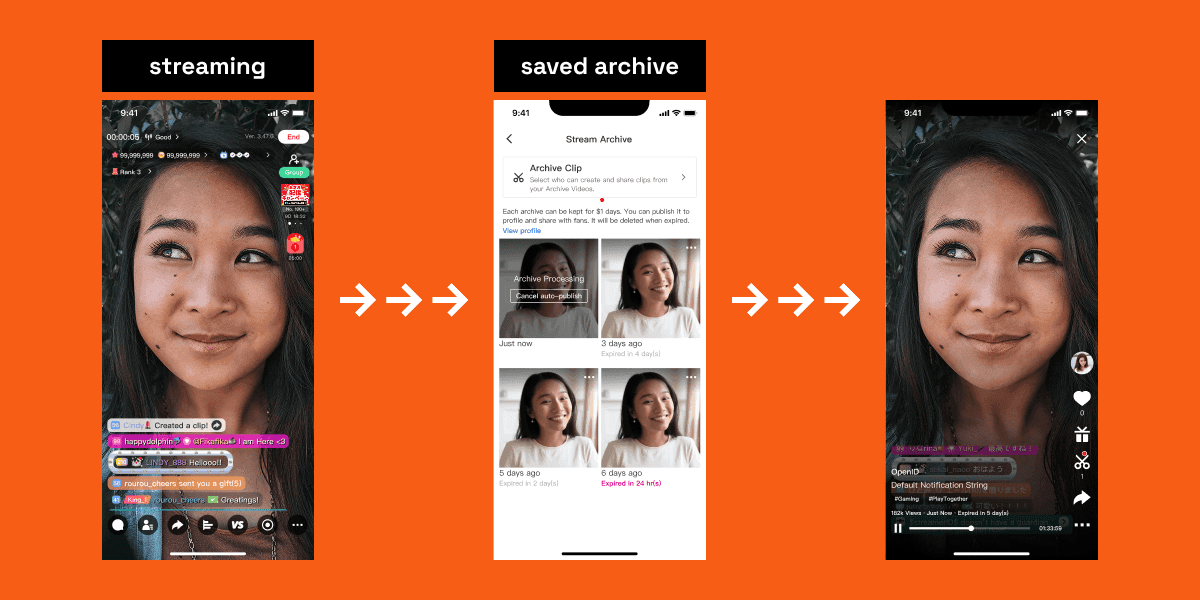
Archive as the Foundation Layer
I positioned archive as the foundation layer for all post-live consumption.
Without persistent replay, content disappeared after stream end. Research showed archive already had utility for missed streams and memorable moments.
Post-live view behaviors, retention analysis, and repeated streamer exposure became measurable.
Backward-Looking 90-Second Capture
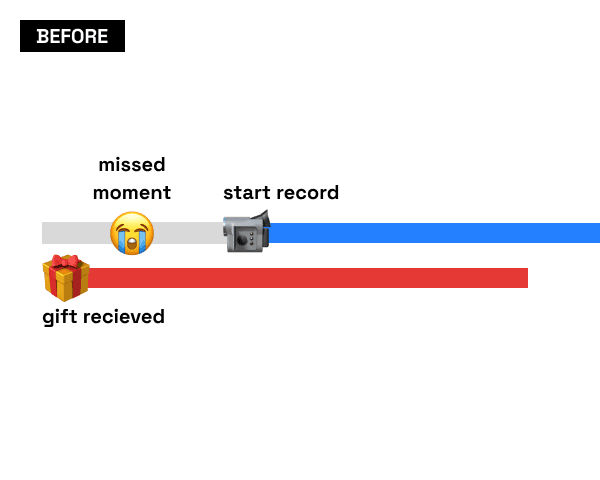
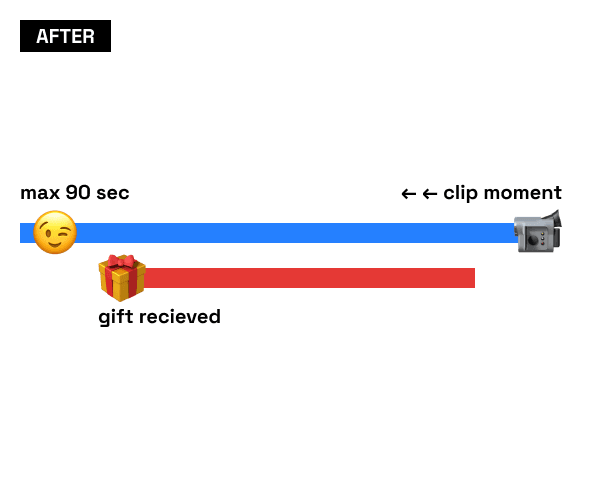
I designed clip creation to trigger on user tap, retrieving the prior 90 seconds — not recording forward from that point.
Spontaneous moments are unrecoverable when capture requires predicting the future. Backward-looking capture inverts this dependency.
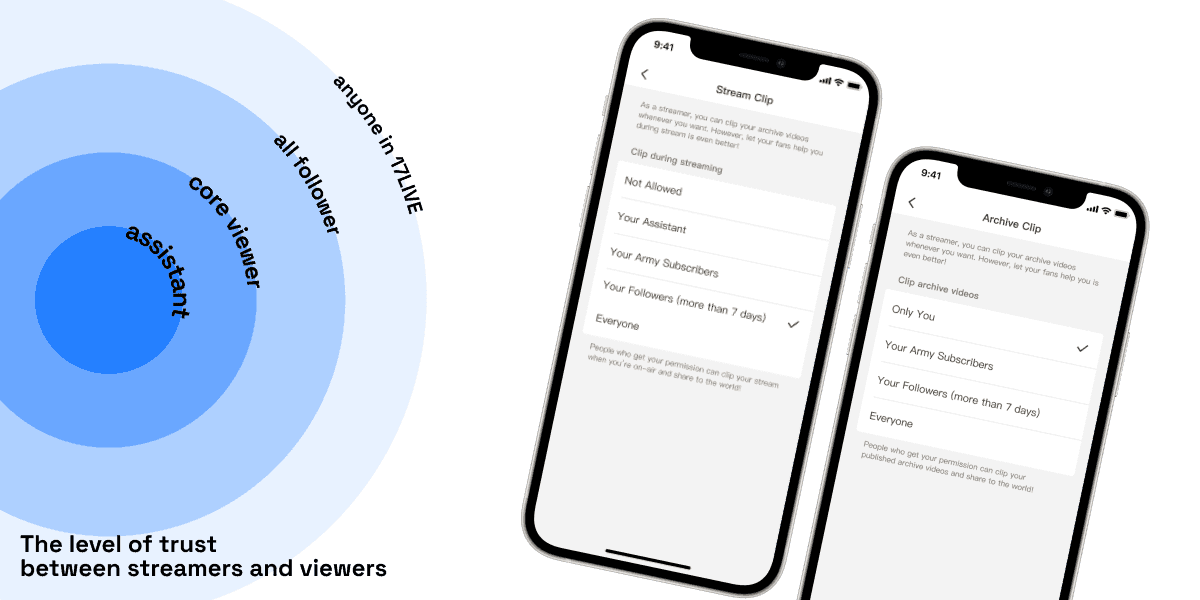
Streamers and approved viewers can clip from both live sessions and archive, creating higher shareability and stronger top-of-funnel exposure.
One Player Architecture for All Content Types
I designed one player architecture for archive and short clips, with in-product trimming built in.
Fragmented playback patterns increase maintenance cost, create inconsistent mental models, and keep clipping operationally hard at scale.
Faster rollout, consistent behavior, lower creation friction, and a practical bridge from replay watching to shareable output.
Streamer Entry as a Conversion Lever
I restructured clip playback surfaces to increase streamer position visibility and click intent.
High clip consumption without visible streamer presence produces traffic that doesn't convert. Placement was the friction point, not content relevance or intent.
Test-validated CTR uplift from 0.6% to 9.9%, proving UI placement as the primary conversion lever.
Reusable Video Player
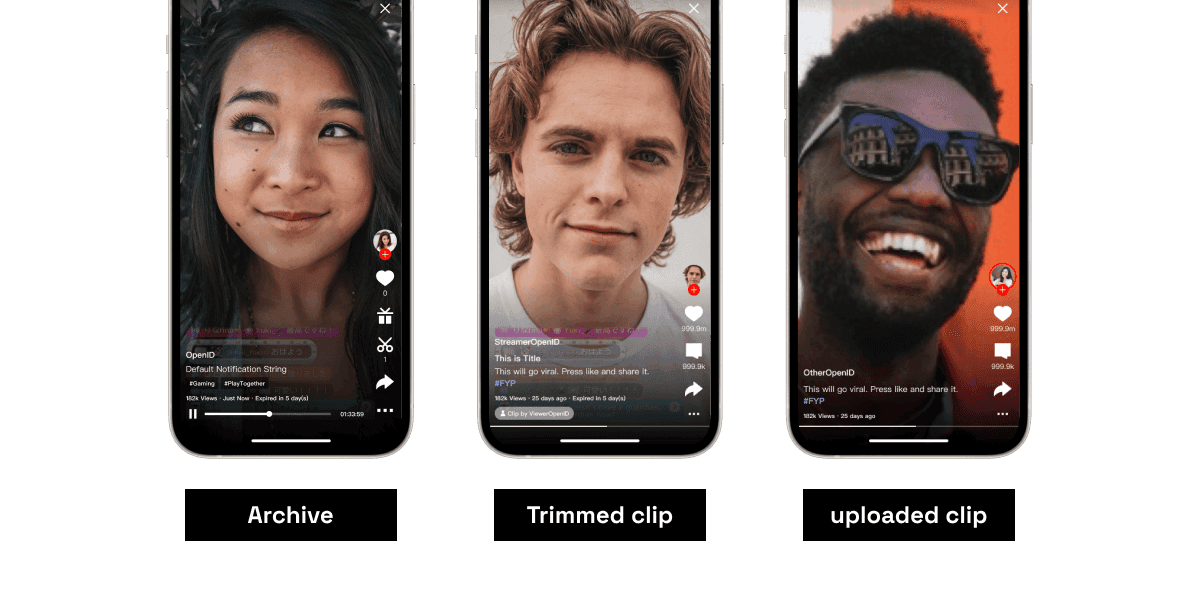
I started from the player layer, because archive and clip would fall apart quickly if playback behavior changed from one surface to another. So I pushed for one player architecture that could handle both archive and short-form playback across different durations and content types. The easier path would have been separate solutions for separate surfaces, but that would have forced users to relearn controls depending on what they were watching and doubled the maintenance burden later. I also aligned the UX output from multiple designers into one interaction framework so the player behaved like one system instead of a pile of related screens.
Clip Creation and Trimming
From there, I designed the clip flow around one specific behavior: people recognize a moment after it happens, not before. That is why I used a 90-second backward-looking capture flow. Tapping clip retrieves the prior 90 seconds instead of asking people to predict the moment in advance. Once I made that decision, the UX problem changed. I no longer needed to help users record at the right time. I needed to surface the clip action at the right moment during replay.
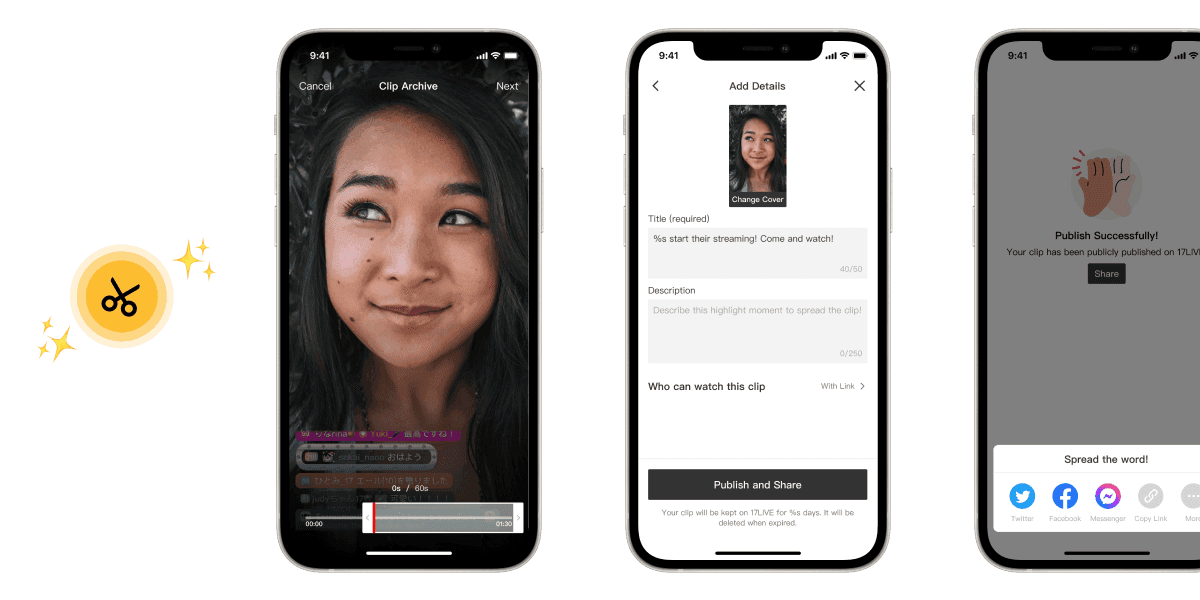
That decision only worked if the flow stayed operationally usable. So I also designed the first in-product video trimmer and opened clip creation to permissioned viewers as well as streamers, from both live sessions and archive playback. The goal was to turn recognition into action with as little extra work as possible.
Sharing and Entry Flow
The last part was making sure clip consumption could lead somewhere. I designed the sharing flow for both external and in-app destinations, but the bigger issue was conversion. High clip consumption without visible streamer presence is just traffic that does not go anywhere. So I changed clip playback so the streamer was visible by default and the path back to their profile or live room was direct rather than buried below the video.
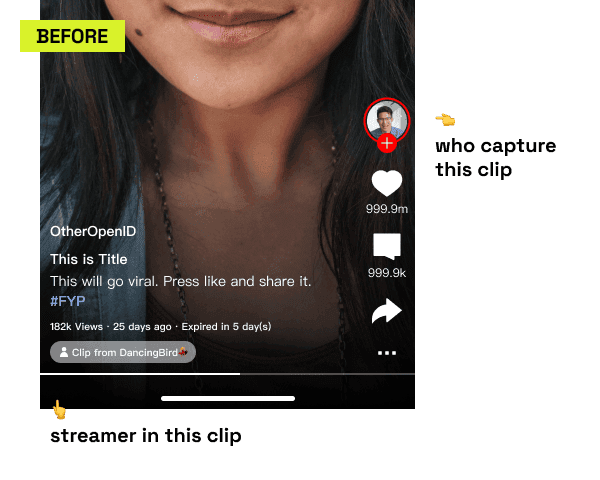
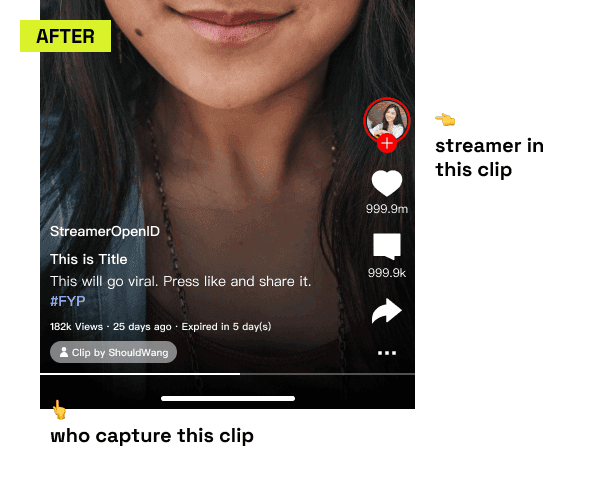
That later proved to be the right lever when CTR moved from 0.6% to 9.9%. After that, I kept iterating from entry source, click-through, and conversion signals instead of assuming the first layout had already solved the problem.
What This Indicates
Archive and clip extended content value beyond the original live window, with measurable gains in both re-engagement and retention.
The clearest leverage came from the discovery → re-engagement path, where distribution, playback, and streamer entry design worked together as one lifecycle system — not as independent features.
What worked well
Making archive the foundation first, then pushing clip as the next layer, turned out to be the right sequencing. Archive made post-live playback possible, but clip was the step that made redistribution and re-engagement materially stronger, and pushing for that shift early helped the lifecycle expand beyond replay alone.
What was challenging
The hardest trade-off was that broader clip adoption depended on broader archive adoption, but streamer control and platform distribution incentives did not always align. Some streamers wanted the value of clip creation without enabling archive or without opening clipping access more widely, which meant the old highlight-recording flow could not be fully sunset even though the new clip model was structurally stronger.
What to improve next
If I did this again, I would define clip entry and placement earlier from the user goal and intended flow, rather than spending too long aligning to existing architecture first. The strongest later signal came from purpose-driven placement, so that hypothesis should have been tested sooner.