


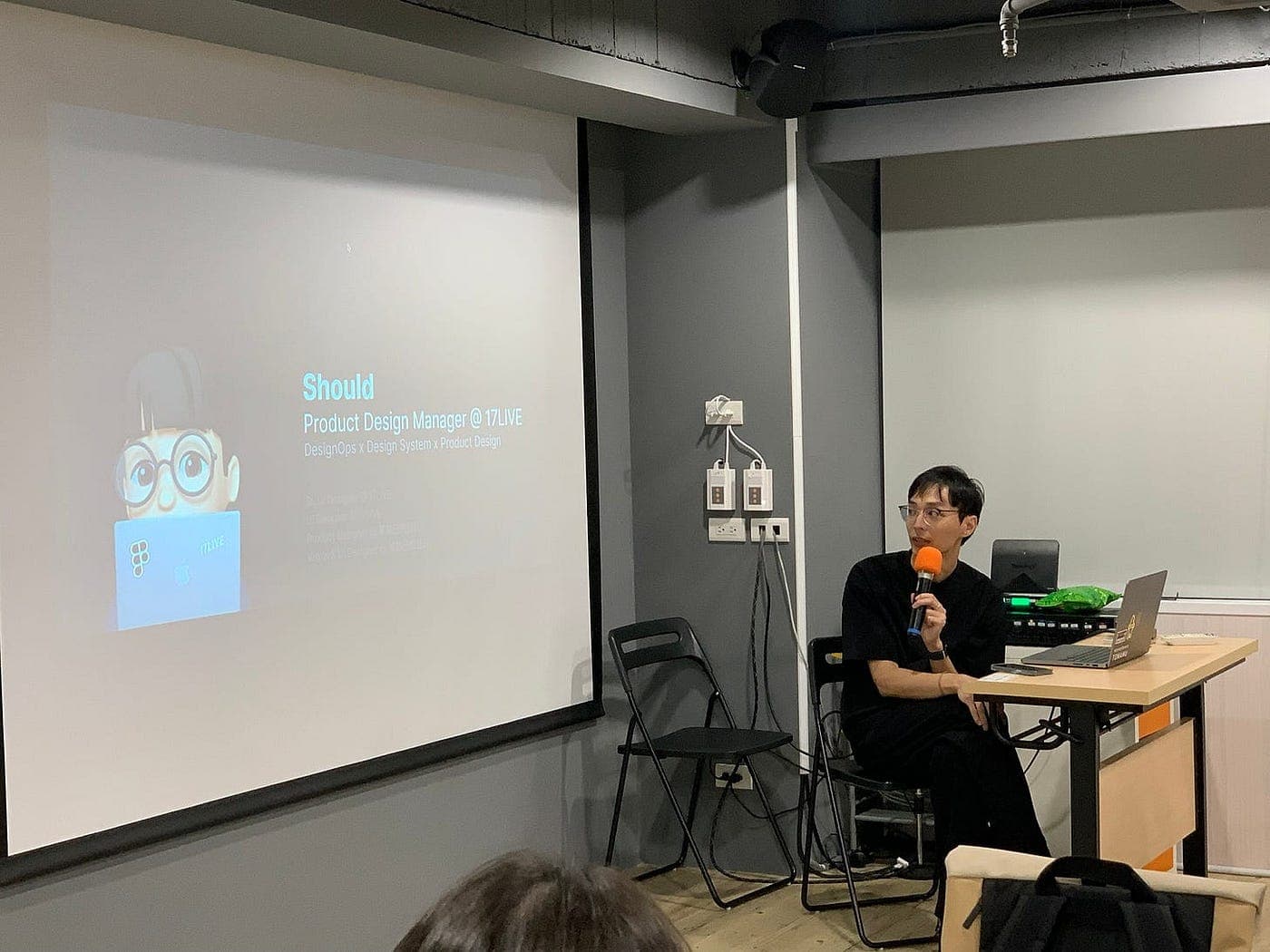
This article is written according to a lightning speech that I had at an in-person event held by userxper.
First of all, I would like to thank userxper for inviting me to an in-person event and giving a lightening speech to the attendees. After much thought, I had so many topics in mind to talk about, but given the time limit of just 10 minutes, I finally decided to simply share my experience of transitioning from a individual contributor role to a manager role, and the differences and insights I've gained about these two identities. So, here comes the topic:
The Difference between IC Role and Manager Role in Product Design.
How did I become a manager?
Let me start with a brief introduction. My name is Ching-Jan (Should), and I am a product design manager at 17LIVE with 2 years of experience. Before taking on the role of manager, I was a Senior UI designer.
During my time as a designer, I became familiar with the field of Design Operations through Figma Config and the DesignOps courses offered by userxper. These conferences and courses led me to explore a new skill set.
In 2022, as our small team gradually expanded, the need for documentation, processes, and standards became essential for smooth team operations. Being a seasoned designer, I had the practical experience that I could apply, including visualizing design development processes, onboarding new team members, and assisting in refining internal operational workflows.
By the way, you can check what I have done to implement DesignOps at 17LIVE with the previous article:
Coincidentally, with a series of experiences in improving the team and serving as part of the recruitment and training newly hired members, I transitioned to a manager role in 2023 after numerous one-on-one meetings and discussions with my supervisor.
Initially, I thought that after becoming a manager, I would have more authority to communicate with other teams and optimize cross-departmental collaboration processes, but in reality, it turned out to be…

In the first year, I often found myself thinking about what I'm doing or what I can do. However, I noticed a few significant differences between being an individual contributor (IC) and a manager during that time. Here are the most notable differences I observed.
#1 Depth and Breadth of Project Involvement
For clarity, imagine a graph where the horizontal axis represents the progression of time and the vertical axis represents the depth of involvement — the deeper down the graph, the more detailed the involvement.
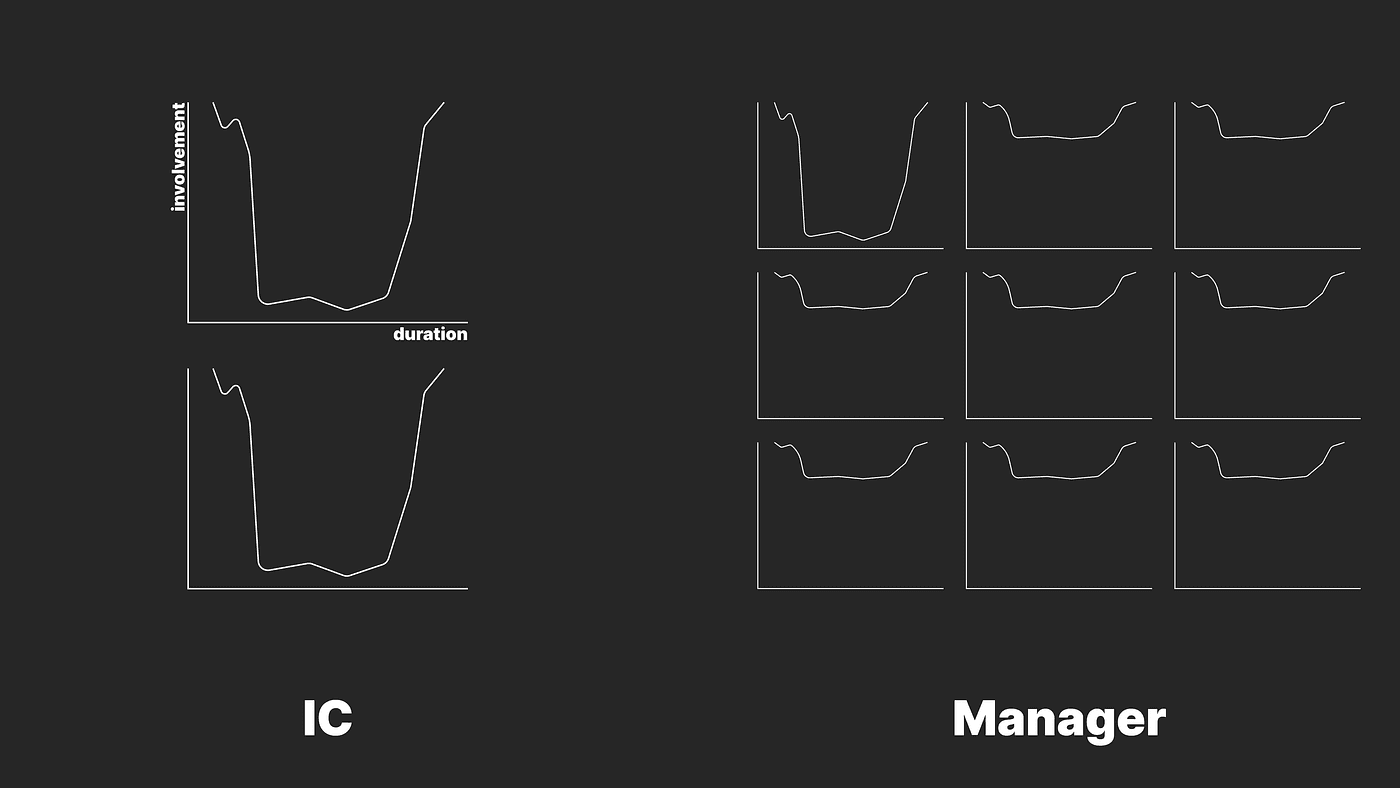
When I was an individual contributor (IC), I usually had one or two projects to handle. As an IC, I would start by discussing requirements with the project manager (PM), then move through design, delivery, Design QA, and stay involved until the project was launched. I'd also keep up with other team members' project progress and design directions during weekly syncs or design meetings.
However, after moving into a management role, some of my work still involves design, not just management. So, I usually have one project that I'm directly responsible for, following it through until it goes live. But now, I have to oversee the quality of all the design outputs from my team and take responsibility for my team members' work. Each project, from kickoff to launch, requires substantial time to follow up, understand changes, and review the designs. This makes it a big challenge to stay on top of every project's context and ensure all outputs meet the standards.
#2 Meetings - Your Control Over Your Own Time
Due to the number and scope of the projects involved, the time spent in meetings changes significantly. When I was an IC, my meetings were typically limited to team syncs, design reviews, delivery meetings, and daily syncs with developers. In a standard 40-hour workweek, I usually had 20–30 hours to focus on project design work.
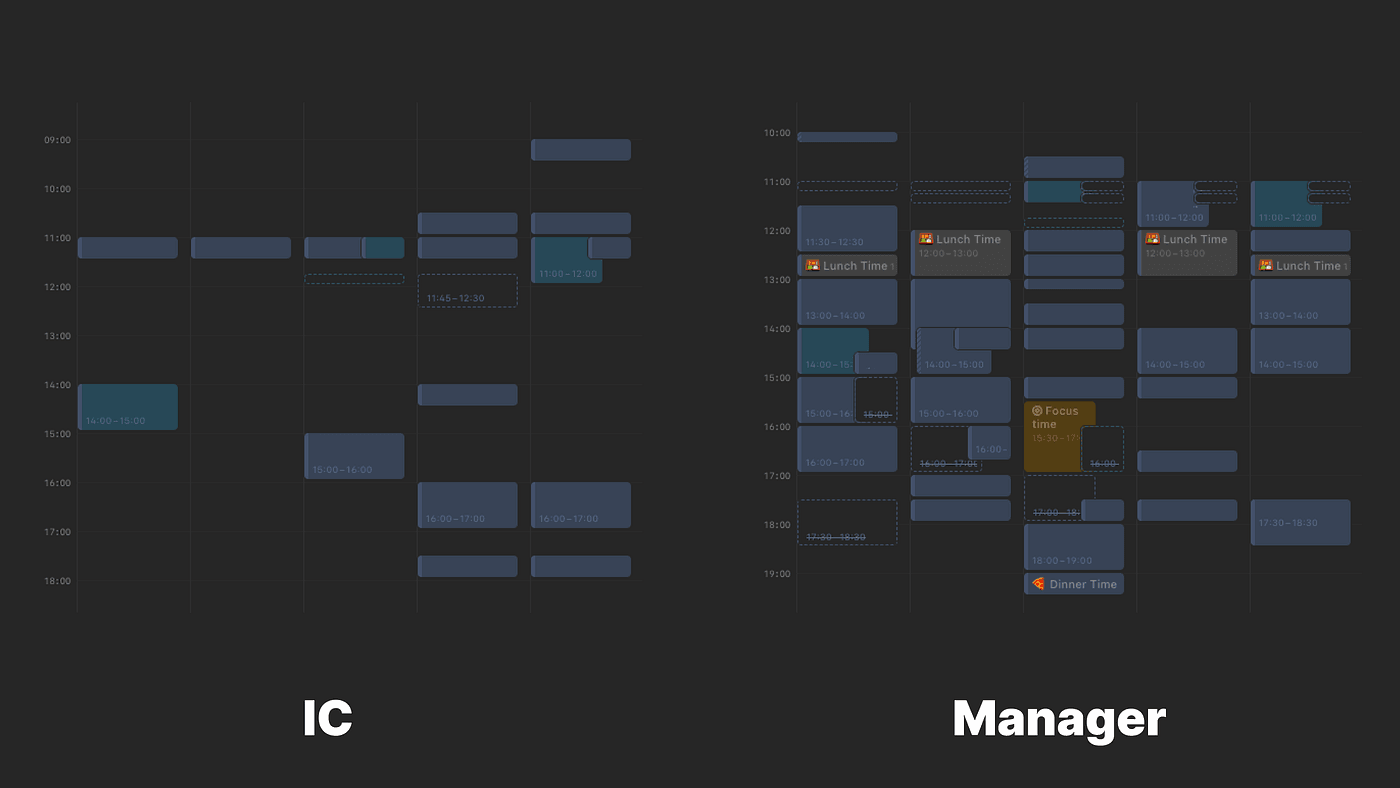
After transitioning to a managerial role, the volume of projects I need to follow increased. In addition to the regular meetings for my own projects, I might have several design reviews or kickoff meetings each week. Plus, there are regular one-on-ones with both my superiors and team members, and I often need to engage in cross-departmental discussions about processes and tasks. This means that meeting time alone can take up 25–30 hours of my week. After accounting for daily tasks, I might only have about one workday left for design work, and that one day is usually scattered across different times throughout the week. 😂
#3 Tools aka Your Daily Tasks
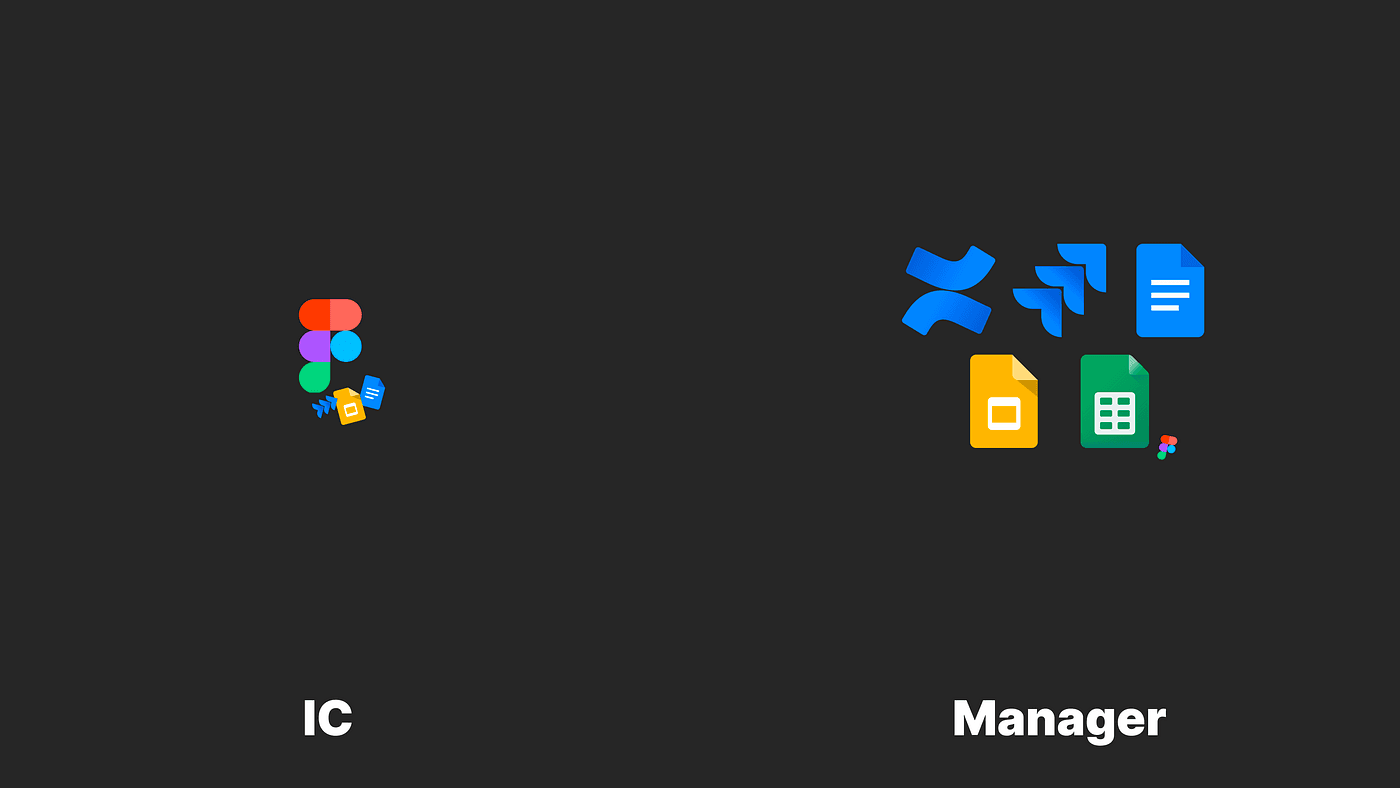
With the shift in job responsibilities, the tools you use daily also change. As an IC, I primarily use Figma for design work, occasionally opening word processing software. However, as a manager, I become a master of various administrative/project management tools. These include word processing software, expense reporting tools, and project management platforms like JIRA and Confluence. Figma becomes a tool I only open when I have a project of my own or need to review someone else's work.
Of course, besides these tools, there are significant changes in responsibilities, decision-making, and communication. However, given that this talk is only 10 minutes long, it's impossible to cover everything in detail. I've highlighted many differences between IC and management roles, and after preparing and delivering this presentation, I realize that these differences might discourage some ICs from wanting to try a managerial position. 😂
But if you're genuinely interested in a managerial role, especially in product design, it typically divides into two main areas: design management and personnel management. Based on my brief experience of just over a year, I'd like to share three major questions from my perspective that can help you determine if a managerial role is right for you:
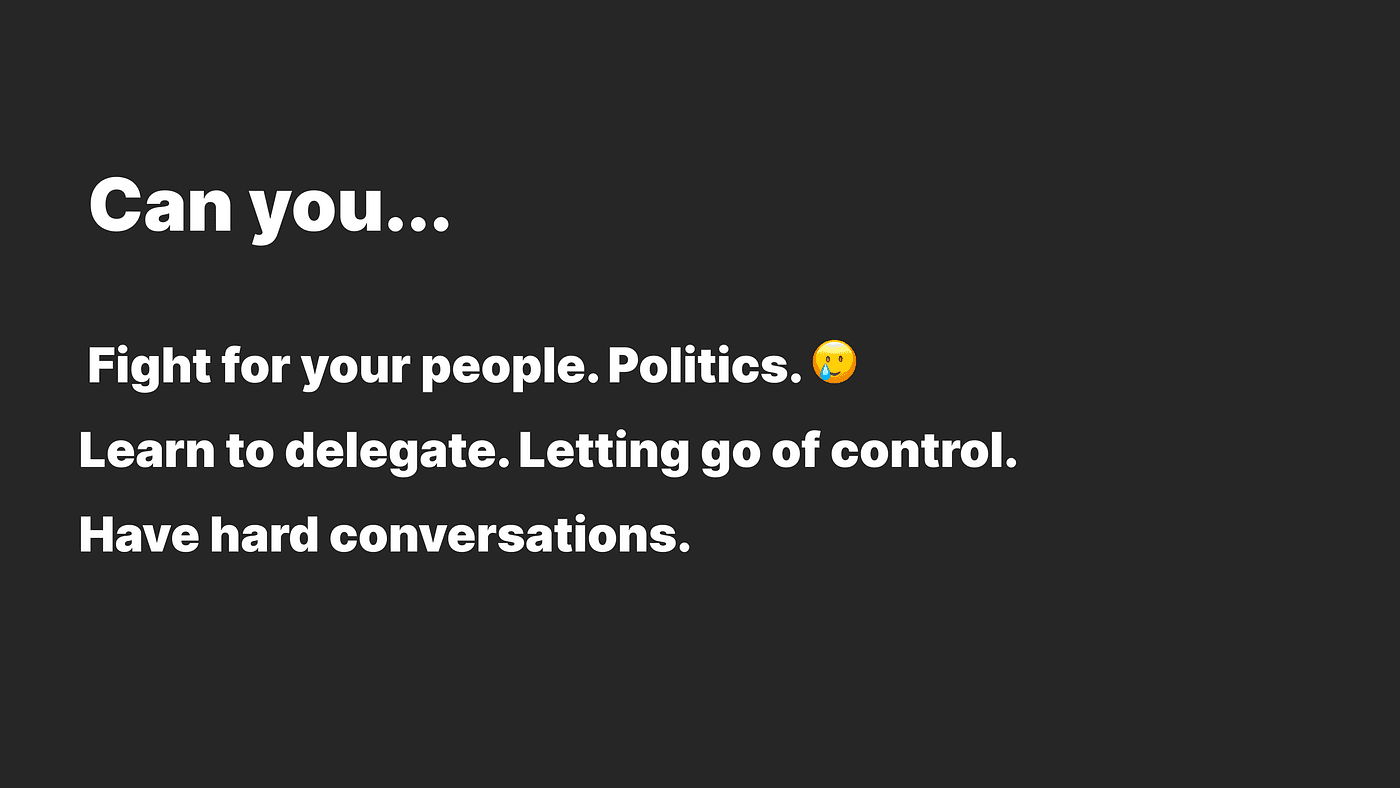
#1 Can You Stand Up for Your Team Members?
The first question goes straight to the core of being a manager. Once you transition into a managerial role, in addition to conveying the organization's expectations downward, you also need to understand how to protect your team members. This is especially crucial when conflicts arise during cross-team collaborations or when implementing strategic adjustments by the company. Ensuring that your team can work with peace of mind without being disturbed by various issues is vital. Essentially, it's all about navigating organizational politics.
#2 Can You Delegate Tasks, Trust Your Team Members, and Learn to Let Go?
As an IC, you might be accustomed to handling everything yourself because you believe you can do it well. However, once you become a manager, your goal is to optimize the team's overall productivity. Understanding who is suitable for which projects, who has what expertise, and who is less proficient in certain areas is key. Trusting your team members and letting them handle tasks while ensuring quality control of their output is essential. Avoiding micromanagement is a significant challenge at the beginning. (Gazing into the distance…)
#3 Can You Bravely Engage in Difficult Conversations?
This point is something I learned and applied from the book "The Making of a Manager", and I must admit it's indeed crucial. When your team members aren't performing up to expectations, when there are conflicts among team members, or when you need to discuss their career paths, these significant discussions aren't usually covered in casual conversations. Initiating and guiding the conversation, and ensuring the atmosphere doesn't become overly tense during one-on-ones, starts with having difficult and awkward conversations.
If you find yourself confident in the points mentioned above, you might possess some of the essential qualities required for a managerial role. Other important traits include leadership, advocacy, and more, which are too numerous to fully cover here. However, if you're still interested, here are some recommended books to help you on your managerial journey:
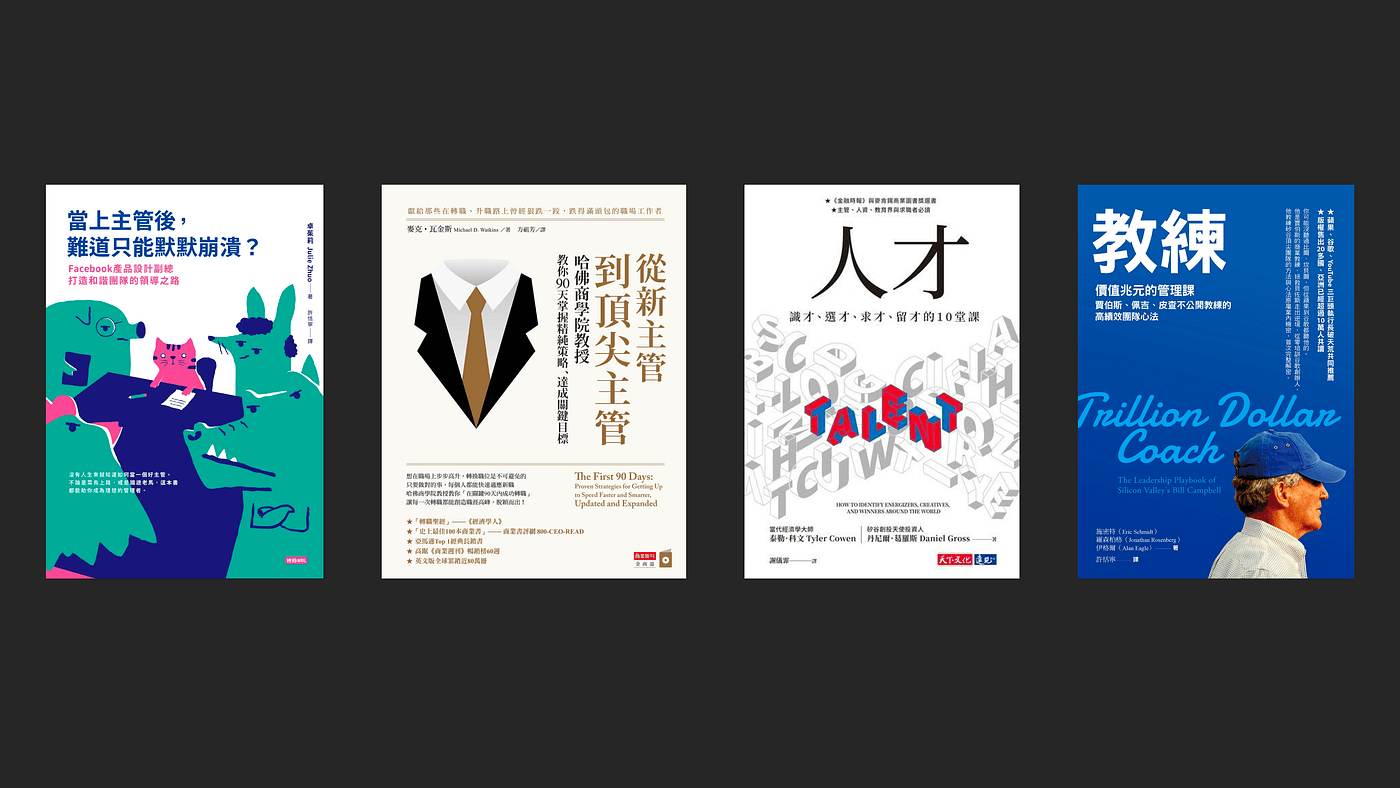
"The Making of a Manager"
Highly recommended for all new managers or those interested in a managerial role, this book discusses how to conduct one-on-one meetings with team members, how to motivate the team, provide effective feedback, recruitment techniques, how to run meetings, and how to establish company culture. It's a powerful practical guide for new managers who feel lost at the beginning.
"The First 90 Days, Updated and Expanded," "Talent," "Trillion Dollar Coach"
These books use various case studies (including both successes and failures) to delve deeper into how to establish guidelines for the aspects mentioned above. On my journey to becoming a manager, I have been both practicing and referencing these books to gradually improve my behaviors and strategies. (There are still a few I'm still reading lol)
That concludes my short talk. For me, stepping into a managerial role has been a journey of self-discovery. As my responsibilities expanded, so did the range of people and matters I needed to consider, making my strengths and weaknesses more apparent. Recognizing, improving, and gradually shaping my management style continues to be a lesson I am learning.
I'm Should, see you all at the next article. 👋
💡 Have you also moved from an IC role into management, or are you thinking about making that jump? I'd love to hear about your experience!
Leave your experience on Medium below!